Category Archives: Uncategorized

The Beginning of the American Revolution

0

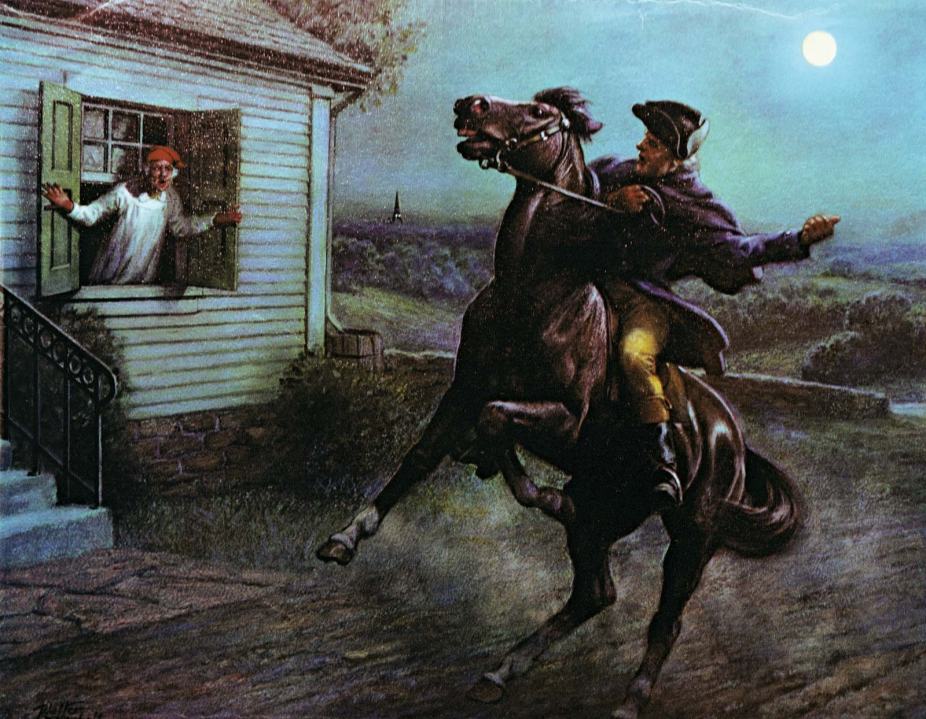
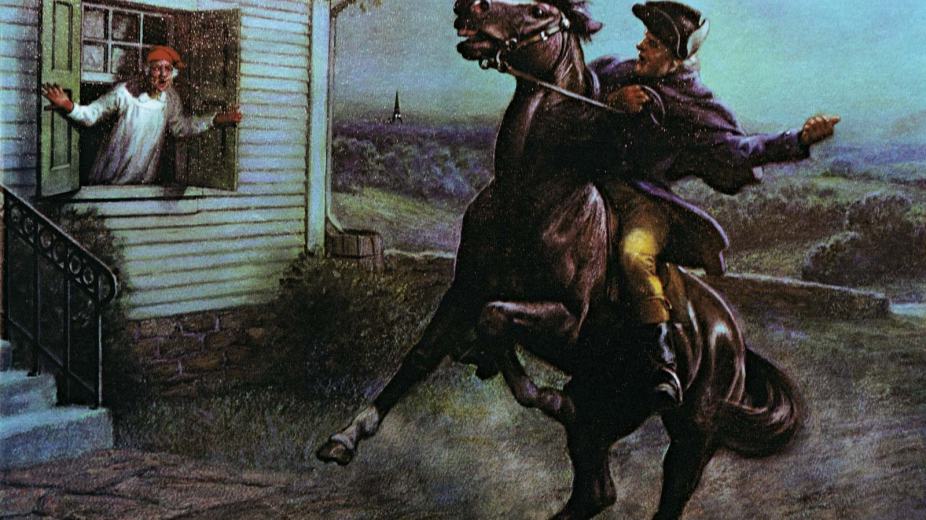
In the early morning hours of April 19, 1775, British troops marched from Boston to Lexington and Concord, Massachusetts. Their purpose was to capture the Patriot’s supply of weapons and powder in Concord. The British also sought to capture the rebel leaders Samuel Adams and John Hancock who had recently fled Boston for Lexington. While the British left Boston under the cover of darkness, the Patriot Militia had warning of their advance through the watchful eyes of the rebels, Joseph Warren, William Dawes, and Paul Revere. Both Dawes and Revere made their famous midnight rides through the Massachusetts countryside telling the local militias to rally. Revere’s cry through the night was probably not the legendary quote, “The British are coming,” but rather “The Regulars are coming.” Local militiamen would have recognized “Regulars” to mean the British soldiers who were stationed in Boston.

revere ride

Revere’s Midnight Ride

Revere made his way to Lexington to warn Hancock and Adams who then left Lexington for Burlington, Massachusetts. He and Dawes made it to Concord to warn the local militia to hide the stores of weapons and powder. Thanks to Dawes and Revere most of the supplies were hidden from the British. Some weapons and supplies were reportedly buried in fields made to look like newly furrowed ground for planting.

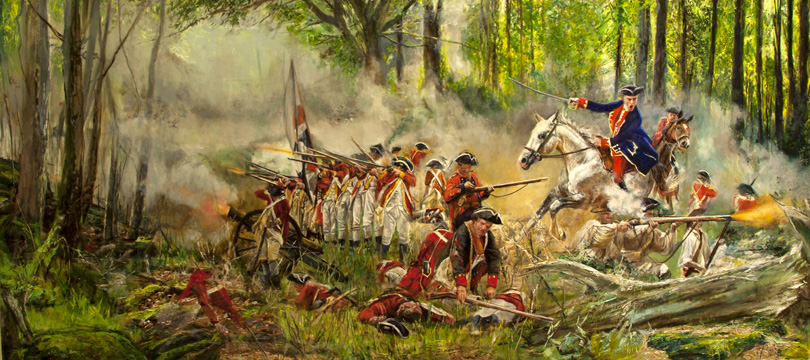
Revere’s and Dawes’ rides saved supplies, but with the militia now turned out and armed, violence was bound to occur. At dawn on April 19th on the Lexington Green, the first shot of the American Revolution was fired. Reports vary wildly on who fired the fist shot. The shot caused the tense situation to erupt into violence. The local militia was easily outnumbered by the British and scattered quickly as the Regulars advanced toward Concord. While the British marched to Concord with few casualties, their retreat back to Boston was made under nearly constant fire by local militia.

The British reported 73 killed and 174 wounded. Their casualties slightly outnumbered those suffered by the Patriots. While these battles were not tactically important, they did solidify the patriot cause. After Lexington and Concord, war against England was a certainty. Thus began the epic struggle of a small group of untrained men fighting a war against one of the most powerful nations the world has ever known.

How Sheep Helped Start a Revolution

0

It’s a little hard to imagine how those docile, not so smart, animals known as sheep could have anything to do with starting a war. However, sheep, and more specifically wool, was one of the factors that drove colonists into war against England. Sheep likely first arrived in North America at the Jamestown Virginia Colony in 1609. These were probably Southdown sheep from Sussex, England. The breed is known for producing quality wool and being able to survive on highland grasses with little nutrition. Sheep became an essential part of colonial life and by the mid-1600s there were probably ten thousand sheep in the colonies. Sheep and wool production became so important that in 1664 Massachusetts passed a law requiring children to learn how to spin and weave. In 1662, Virginia offered five pounds of tobacco for every one yard of wool cloth. With continued growth of the wool trade, the colonies began to export wool to other European Countries.

It did not take long for the British Empire to recognize that the colonies’ wool production would soon out match its own as a worldwide source for trade. Ever vigilant to protect its own trade interests, England decided to take action to stop the colonies from exporting wool to other countries. In 1699, the British Parliament passed the Wool Act of 1699, which did three things:  1) it banned the colonies from exporting wool; 2) it forced colonies to only import British wool; and 3) it taxed wool sales. This Act was one of the first of many attempts by Great Britain to force trade restrictions and taxes on the American Colonies.

The Wool Act was just the beginning of Great Britain’s efforts to stifle colonial economic growth through trade restrictions and taxes. The British government enacted the 1764 Sugar Act, 1765 Stamp Act, 1765 Quartering Act, 1767 Townsend Acts (paint, tea, glass, and paper), 1773 Tea Act, and 1774 Coercive Acts. The Wool Act of 1699 was therefore just the precursor to a series of laws that drove colonists into revolt with the cry of “no taxation without representation.” Unlike many of the other Acts on consumer goods, the Wool Act was not repealed by Great Britain until after the colonies had won their independence.

Today, sheep aren’t the same important economic commodity that they once were. Our boys raise sheep for 4-H and to sell for meat.

20150720_121130

Josh and Nathan getting ready to show their sheep at the 4-H fair

Most sheep in the United States are raised for meat, and they only account for 1% of the livestock industry. Wool is no longer the main textile used in clothing. Synthetic fibers and cotton are much more common. It’s amazing to think that sheep and their wool were once so important that they helped start the American Revolution.

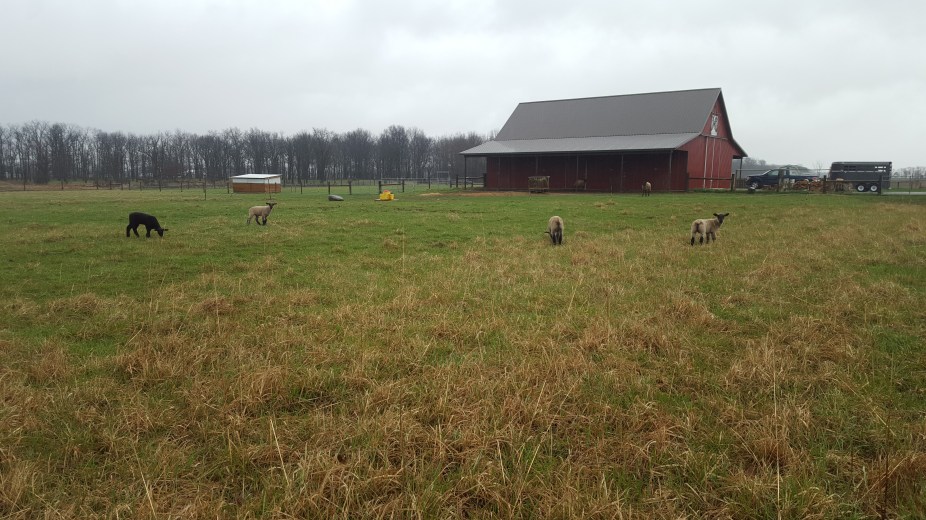
20160406_191737

Spring lambs out grazing on the Stevenson Farm

Five George Washington Facts – In honor of his 284th birthday

0

Today is George Washington’s birthday, February 22, 1732. To celebrate here are five interesting facts about George Washington:

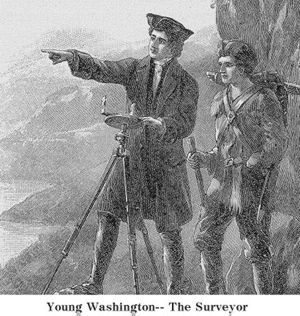
1.Washington’s father, Augustine Washington died when he was only eleven-years-old. Augustine was a plantation owner, whose land ultimately passed to George in 1761, after the deaths of George’s half-brother, Lawrence, and sister-in-law, Ann. Part of this land was named Mount Vernon, which is where George and his wife Martha kept their home. The loss of his father at such a young age meant that Washington was called upon to help support his family much earlier in life than most boys his age. Washington attended school on an irregular basis through age fifteen. He was never able to attend college. Washington managed to learn much of what he needed on his own time, including the skills of a surveyor, which is how Washington earned a living as a young man.

Augustine_Washington

Augustine Washington

YoungGW-Survey2. Throughout his life Washington and his mother, Mary Ball Washington, had a strained relationship. While George’s father died young, his mother lived to the remarkable age of eighty. Mary Ball was stern, argumentative, and was prone to display her hot temper. There is very little display of affection in Washington’s letters to his mother. Most letters begin “Honored Madam.” Mary Ball rarely visited George at Mount Vernon and complained, as she grew older, that George neglected her and that she did not have enough money. In fact, George did provide for his mother despite her complaints, having bought her a fine house in Fredericksburg and seeing to her medical needs. Mary’s domineering personality likely prevented a young George Washington from joining the British Navy as a Midshipman on a British frigate. Imagine how different our Country might look had Washington joined the British Navy!

mary_ball_washingtonpine

Mary Ball Washington

3. As a young man Washington studied rules for good manners, memorizing proper etiquette for different situations. By today’s standards Washington was obsessed with good manners. However, in Virginia circles of society good manners were nearly as important as knowing how to read and write. Washington was a master of good manners. Here’s a few of the manners that he memorized, which might still prove useful today.

“Every action done in Company, ought to be with Some Sign of Respect, to those that are Present.”

“Play not the Peacock, looking everywhere about you, to See if you be well Deck’t, if your shoes fit well, if your Stockings sit neatly, and Cloths handsomely.”

“Shift not yourself in the Sight of others nor Gnaw your nails.”

4. Washington was never wounded. This is quite remarkable considering the number of battles that Washington fought over the course of his life. In many of these battles he led his men from the front, charging into enemy fire. Still more amazing is the fact that Washington lost more battles than he won, yet he was never wounded. In the French and Indian War Washington he had two horses shot from under him at Braddock’s defeat and had four bullet holes in his clothes. Washington appeared fearless in battle, even commenting that “I have heard the bullets whistle, and believe me there is something charming in the sound.” Native American’s believed that Washington had some Divine protection and could not be killed by a bullet.

5. Washington was quite tall for men of his age. Washington was reportedly 6 feet, 2 inches tall. He was not only tall, but broad-shouldered with thick legs. Washington’s strength came in part from his months spent in the wilderness as a surveyor. Washington would have also spent hours on horseback nearly everyday. He was a superb horseman able to gallop through thick woods without losing his mount. This physical strength was coupled with Washington’s grace and good manners. He was an elegant dancer despite his large size. Washington’s physical strength certainly won him respect among the soldiers who followed him and helped him become one of the greatest military leaders of all time.

Ever Heard of Pierre-Augustin Caron de Beaumarchais?

0

Chances are you have never heard of this Frenchman who helped save the American Revolution. While we have cities, rivers, and counties named after the French Marquis de Lafayette, Beaumarchais has no such name recognition. Yet, without Beaumarchais it can be argued that the Revolution would have completely failed. Why then have few ever heard of Beaumarchais? The truth is that Beaumarchais never won glory on the battlefield, instead he fought the seemingly boring battle of convincing King Louis XVI to fund the American Revolution with guns, cannon, powder, bayonets, and all of the other supplies needed to fight a war. Beaumarchais did most of his work in secret disguised as a French merchant instead of an agent of the French monarchy. Thus, unfortunately history has passed over Beaumarchais as an afterthought.
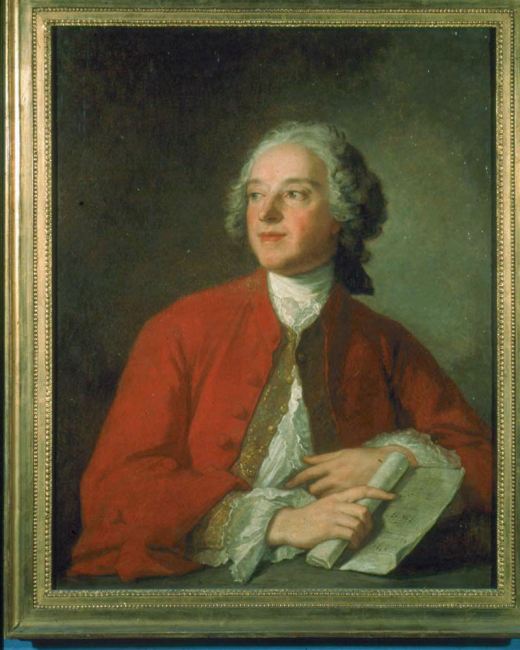
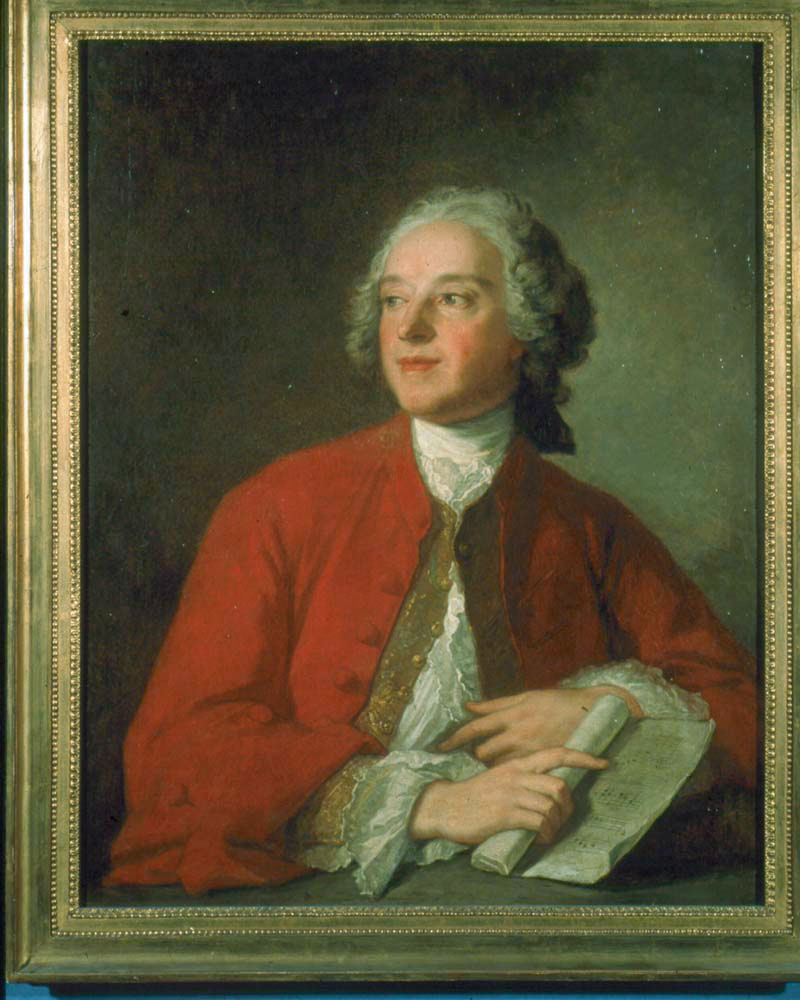
D'après_Jean-Marc_Nattier,_Portrait_de_Pierre-Augustin_Caron_de_Beaumarchais_(Bibliothèque-musée_de_la_Comédie-Française)_-002

Portrait of Beaumarchais

Pierre was born in Paris in 1732. His father was a watchmaker and so Pierre learned the skilled trade of watchmaking as a boy. As a watchmaker’s son, Pierre was a commoner, and not of noble blood. This didn’t stop Pierre of aspiring to become an influential member of French society. Pierre grew up with five sisters who all loved music. He learned to play the flute, viola, and the harp. This love of music and theater stayed with Pierre for the rest of his life. At the young age of twenty-one Pierre invented a new escapement mechanism for watches that revolutionized watchmaking. Watches could now be made much smaller and more accurate. The invention caught the eye of King Louis XV who wanted a watch made for his royal mistress Madame de Pompadour. Pierre found himself as the new royal watchmaker. In 1755 Pierre married and took the name de Beaumarchais, but less than a year into the marriage his wife died and left Beaumarchais with large debts. Beaumarchais’ good looks, pleasant voice, and quick wit won him the job of music teacher to King Louis XV’s four daughters. It was during this time in his life that Beaumarchais’ distaste for nobility grew. He was continually ridiculed by other courtiers as being a commoner who had no business in the King’s court. Beaumarchais also witnessed the unbridled excess displayed by King Louis XV who was constantly seeking new mistresses and new ways to spend the French Treasury’s money.
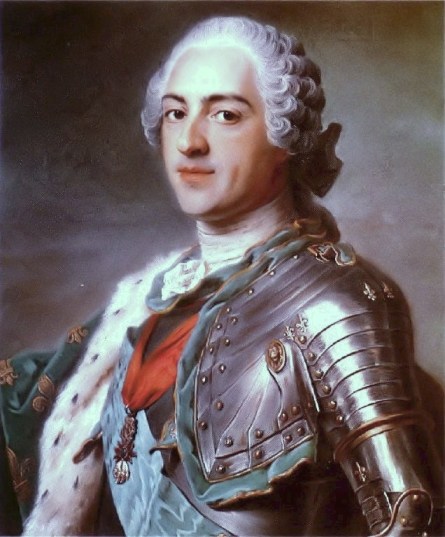
Louis_XV_by_Maurice-Quentin_de_La_Tour

French King Louis XV

Beaumarchais’ brilliance caught the eye of the wealthy entrepreneur, Joseph Duverney, who over the next several years served as Beaumarchais’ mentor. The two became close friends despite the fact the Beaumarchais was fifty years younger than Duverney. Duverney taught Beaumarchais the world of finance and diplomacy. In partnership, the two men became wealthy supplying the French Army with arms and supplies. While working alongside Duverney, Beaumarchais began to write plays, mainly one act comedies. Among his other talents, Beaumarchais was a skilled writer. Just when things were looking up for Beaumarchais, his mentor Duverney died.
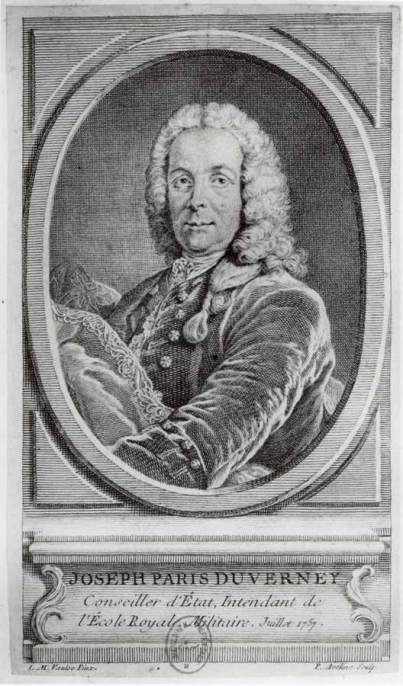
073

Duverney’s family laid claim to all of the business’ wealth, left Beaumarchais with nothing, and even wrongly accused Beaumarchais of owing the family estate 56,000 livres ($200,000 today). Beaumarchais fought to get back his part of his earnings but ended up in jail awaiting a trial. The noble born Comte de Blache, Duverney’s great-nephew, had Beaumarchais jailed so that Beaumarchais would not be present at the hearing concerning the Duverney estate. Beaumarchais had to pay the judge’s wife a bribe to be allowed to present his side of the story. The judge still decided against Beaumarchais, stripping him of his civil rights. Facing financial ruin, Beaumarchais sought to expose this judicial corruption and used pen to do so. Beaumarchais wrote a series of funny, sarcastic, and emotional short stories that chronicled his time in prison and plainly pointed out the power and corruption of French’s ruling class. The stories were so popular that it led to an investigation of the judge and his wife, who were forced to resign from the judgeship.

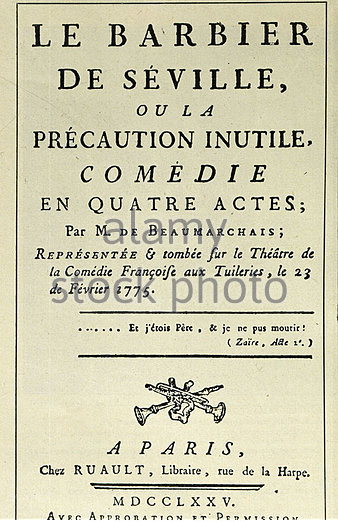
Beaumarchais continued to use his writing as an outlet for his dislike of the ruling class and penned the play,The Barber of Seville. His play contained revolutionary ideas disguised in a comedic plot that poked fun at Spanish nobility. One famous line from the main character Figaro reads: “Because you are a great nobleman,” Figaro says to the Count, “you think you are a great genius. Nobility, fortune, rank, position! How proud they make a man feel! What have you done to deserve such advantages? Put yourself to the trouble of being born – nothing more!” Needless to say King Louis the XV forbid the play from opening in Paris. It was not until 1775, with King Louis XVI now on the throne that The Barber of Seville opened in Paris and became wildly popular, even among French nobility.
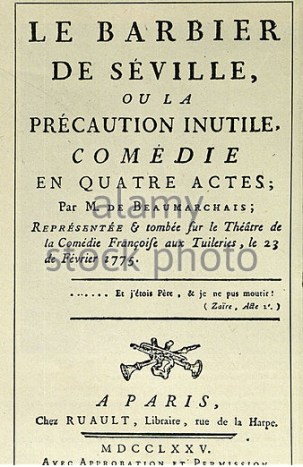
Barber


Beaumarchais was a celebrity in Paris, and once again his genius was called upon by the French monarchy to decide what to do with the war between America and Britain. France could not become entangled in a war after King Louis XV had left the country in financial ruin. Beaumarchais, however, constructed a plot where he would open up as a trade merchant and sell military supplies to the Americans in exchange for tobacco, lumber, furs and other goods. The French treasury’s investment in the business of one million livres (about $4,000,000 today) would be kept secret, and hopefully keep Britain from declaring war against France. Although King Louis XVI was reluctant to fund a war against a fellow monarch, France’s long-time hatred of the English ultimately won the day, and the King agreed to Beaumarchais’ plot. Beaumarchais was captivated by the Americans’ fight for liberty. It was the very same revolution that he was hoping to incite in France. To him, the American Revolution was not just a fight for American independence, but a battle to end the rule of Nobles everywhere. Beaumarchais, albeit with wavering support from Louis XVI, was able to send ships laden with guns, cannon, bayonets, gun powder, and other supplies directly to America. The supplies arrived just in time to save a depleted Continental Army from disaster. The first of the supplies went to reinforce General George Washington in New Jersey and to supply the northern army in New York who was facing British General John Burgoyne near Saratoga, New York. Without these supplies and the eventual French naval and infantry support, which Beaumarchais helped gain, the American Revolution might well have ended in British victory.

Sadly, the American Congress never kept up its end of the bargain with France, and specifically Beaumarchais. Beaumarchais’ ships, instead of being filled with American tobacco and lumber, were instead returned to France empty. Congress likely owed Beaumarchais 3.6 million livres (over $12 million today). It was not until long after Beaumarchais’ death that Congress offered to pay his surviving family 800,000 francs ($3 million today) in 1835 as a take it or leave it offer.

Despite being cheated by Congress, Beaumarchais never lost heart in the cause of liberty. He went on to write The Marriage of Figaro. This play too was banned by King Louis XVI, but eventually opened in Paris in 1784 and became very popular. This play followed the main character Figaro and once again served up revolutionary ideas. These revolutionary ideas eventually took hold in France which led to the French Revolution. Although Beaumarchais was not of noble birth, his service to King Louis XVI was called into question by the bloody revolutionaries who guillotined thousands of innocent French citizens. Beaumarchais survived the French Revolution and died peacefully in 1799 at the age of 67.

It’s not possible to provide all the details of this amazing man’s life in a blog post. Beaumarchais also served as a French spy, was involved in multiple secretive royal plots, and built a beautiful house in Paris. I encourage readers to take a look at Harlow Giles Unger’s biography of Beaumarchais entitled Improbable Patriot As proven by Beaumarchais’ life, fact is often stranger than fiction.
How much firewood did Colonial Americans use?

3

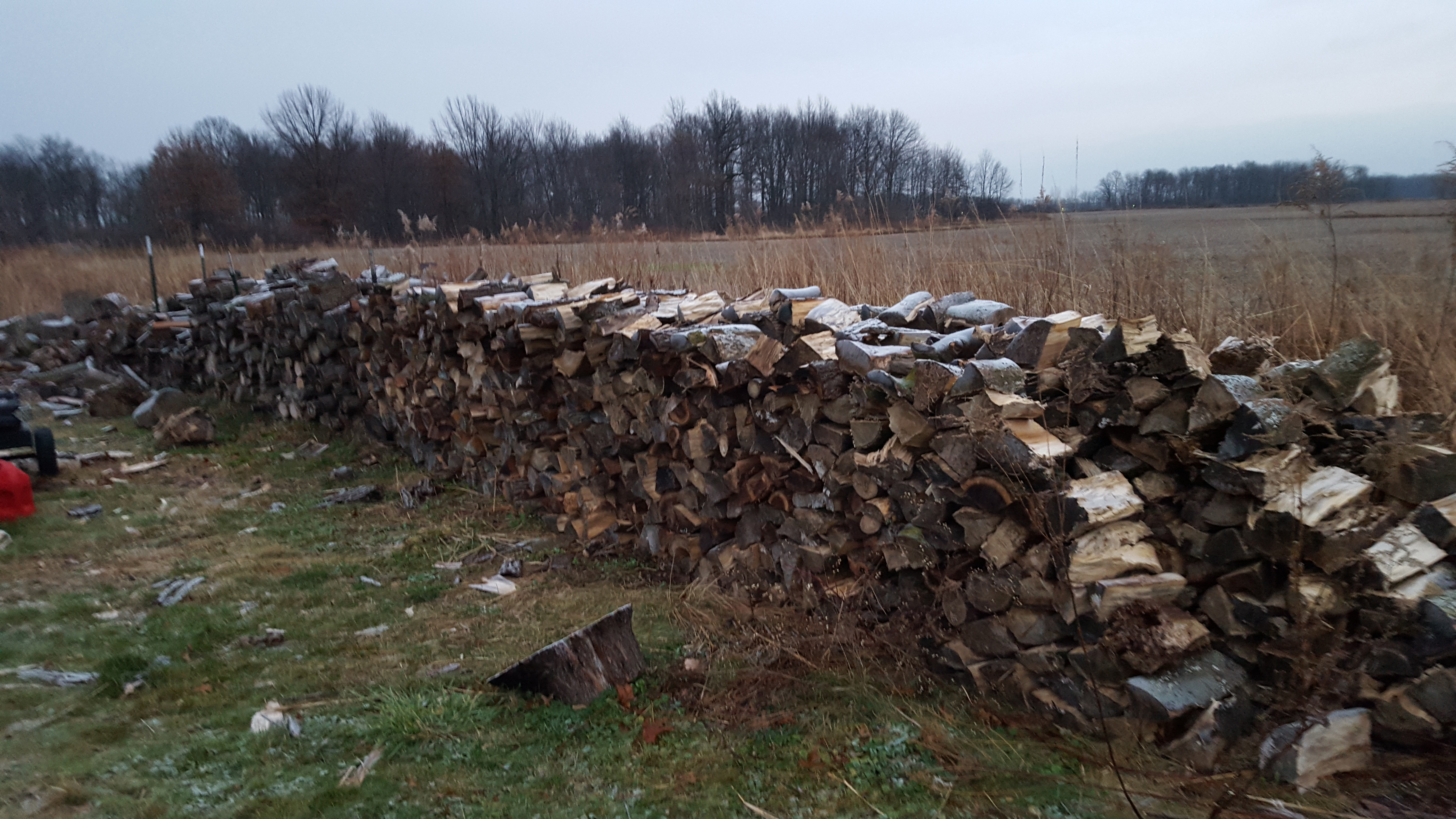
We cut and burn our own wood to heat our house in the winter, and while it seems like we go through a large amount of wood it is nothing compared to what Colonial Americans would have used. Most Colonial homes would have needed at least 40 cords of wood for heating and cooking over the course of a year. A cord of wood is 128 cubic feet or roughly a stack of wood 4 feet wide, 4 feet high, and 8 feet long. Below is a picture of the Stevenson farm woodpile.

20151202_073844

About 5 cords of firewood

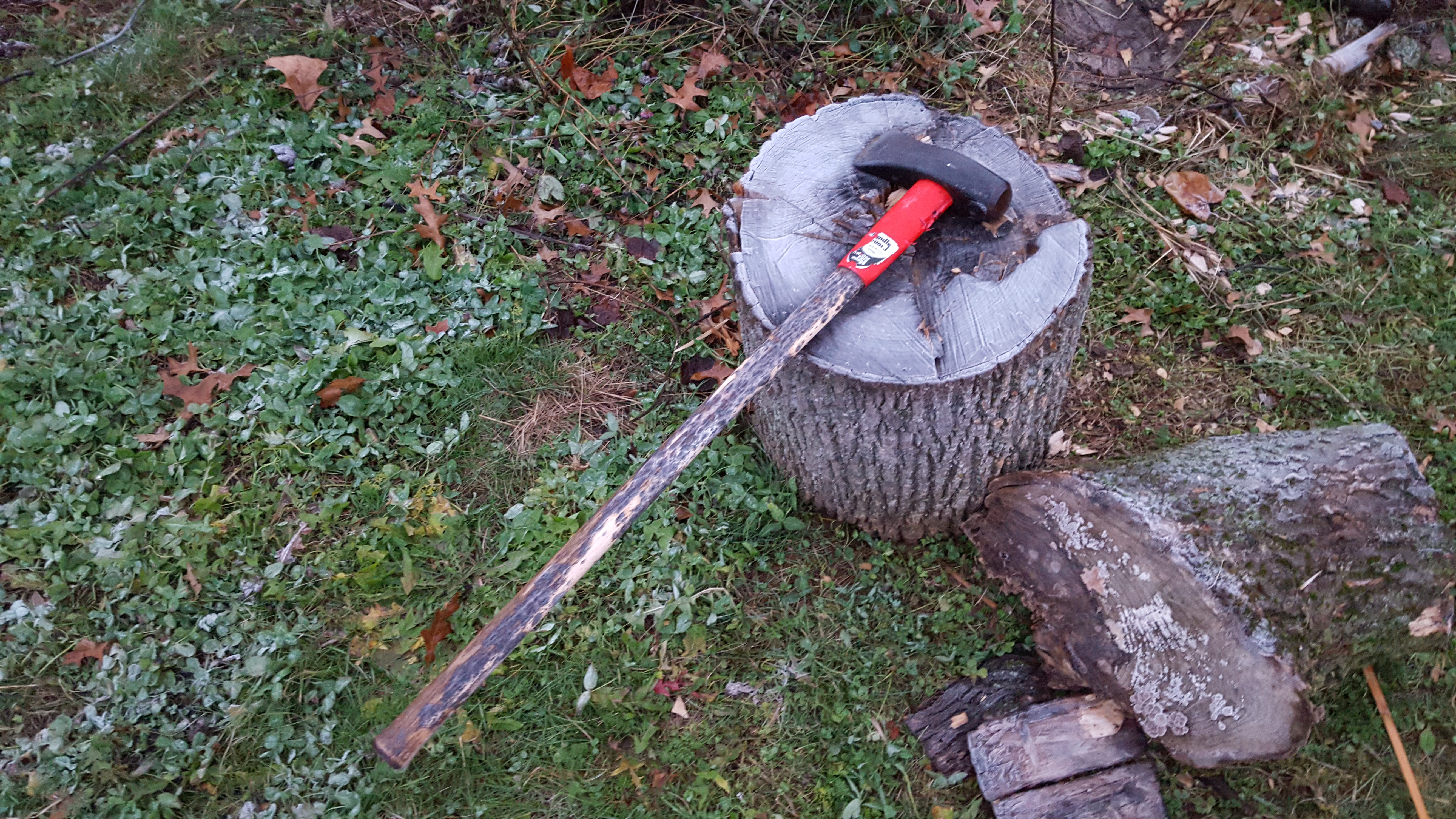
We have about 5 cords of firewood. Imagine multiplying our wood pile by 8 or 9. That is how much wood most Colonial Americans would have used in one year. Worse yet, imagine having to cut and split all of that wood by hand. We use a chainsaw and a hydraulic log splitter to cut and split our wood. Early Americans would have chopped the trees down by hand with an axe and then split the wood with a wedge. We still use a wedge, or maul, on our farm to split some of our wood. Splitting wood by hand is a great way to burn some energy and release some stress, but it is hard work.

20151202_073913

Wood Maul

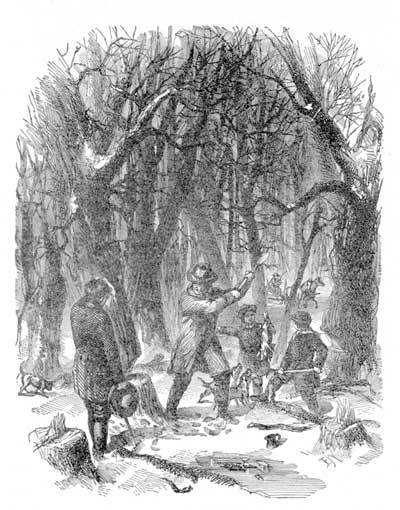
How then did Early Americans manage this precious resource, seeing as they needed so much wood for heating, cooking, and for building materials? Most farms had a wood lot, which was an area of land dedicated solely to growing trees. A typical wood lot would be approximately 20 acres. Depending on the tree sizes, one acre of wood lot could provide enough wood for one year. With a 20 acre wood lot, the newly harvested acre would then be replanted with new trees that would then have twenty years to grow into mature trees. Colonial farmers could also clear woodland for firewood and then grow crops. Clearing land was extremely hard work and would usually require help from neighbors to get trees cut down, stumps removed, and the ground plowed.

wood-cutter

Felling trees in the wood lot

Why then did Colonial Americans need so much wood? Today we have larger homes, but can heat them with a fraction of the amount of firewood. Some might say that we use less wood due to gas and electric ovens now providing a means to cook without a fire. However, the primary reason Colonial Americans used so much more wood was not related to cooking but instead was due to their tremendously inefficient fireplaces. Almost 90% of the heat produced by a fire in a traditional Colonial fireplace would escape through the chimney. Not only that, but chimneys were drafty, letting in cold air.

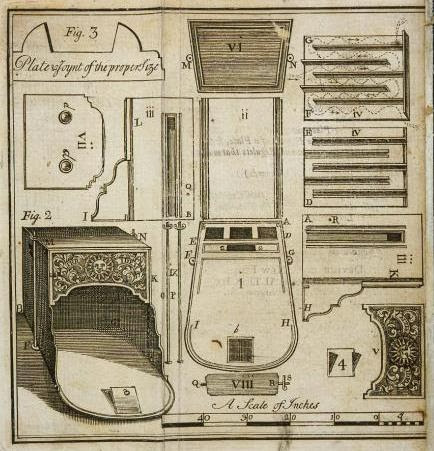
Around 1750, Benjamin Franklin recognized the problem and set to work developing a better fireplace that would reflect heat into a room, instead of up a chimney. He invented the Pennsylvania Fireplace, sometimes called the Franklin Stove.

1744_Franklin_Stove

Franklin’s drawing of the Pennsylvania Fireplace

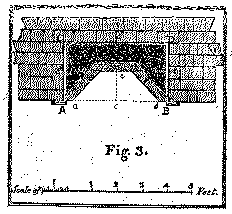
Franklin’s idea of using heat exchangers to transfer heat into a room is still being used in fireplace inserts and cast iron stoves today. Franklin was not the only one to develop more efficient fireplaces. Count Rumford developed a tall and shallow fireplace with angled walls to reflect heat into a room. Rumford was born in Massachusetts in 1753, but as a loyalist he moved back to England in 1776. He spent some time working in the Bavarian government. He later returned to England, and in 1796 he designed the Rumford fireplace.

figure3

Both Franklin’s and Rumford’s fireplaces helped cut back on the amount of wood Americans were burning. Into the 19th century, Americans started burning coal to provide heat. With the use of fossil fuels for heat and energy, the need for wood continued to decline. Thus, the old way of cutting trees on the 20 acre wood lot fell by the wayside. Some people, like myself, continue to use firewood for heat. For our family it provides a warmth for both the body and the spirit, as there is nothing quite like a roaring fire on a cold winter’s day.

Missing Mayan History

0

How is it that we know so much about some historical periods, including my favorite, the American Revolution, but so little about others? Certainly the older the period the harder it is to develop a detailed history. However, much is known about Alexander the Great who lived 356 B.C. to 323 B.C., and yet very little is known about one of the greatest ancient civilizations every formed, the Mayans.

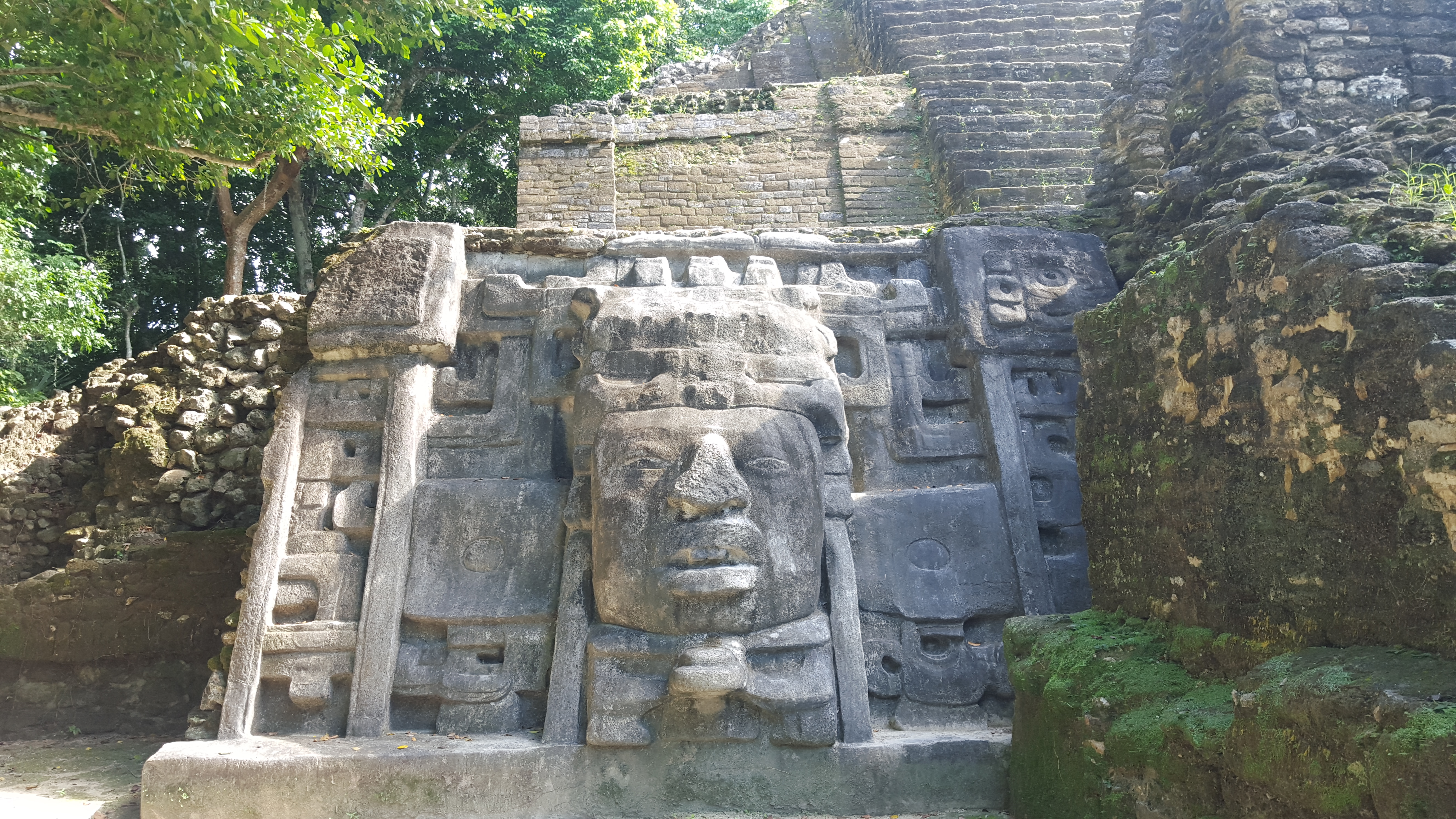
At its peak around 600 A.D. the Mayans likely numbered close to 2,000,000 living in dozens of cities across parts of what is now Mexico, Guatemala, and Belize. They developed a written language, studied the stars, used math, made a calendar, and became skilled farmers. Most impressive were the Mayans’ ability to design and construct enormous pyramids. In our family’s recent visit to Belize, we were able to see these amazing structures for ourselves. We visited the Mayan ruins at Lamanai and Caracol, both isolated ruins in the middle of the Belizean jungle.

20160113_104220

Looking out from Caana Temple at Caracol, Belize

20160109_133457

One of the few surviving carved Mayan temple faces at Lamanai, Belize

Although these two Mayan cities are approximately 100 miles apart, their design is very similar. How did the Mayans build these massive structures? How did they coordinate designs between cities? How were they able to make the pyramids level and symmetrical? More importantly, what led to the collapse of the Mayan civilization? Historians and archaeologists can give educated guesses to these questions, but no one knows for sure.

Why is it then that we know so little about the Mayans? Not long after Christopher Columbus found the New World, Spain sent missionary priests to teach Christianity. In the mid-1500s Spain sent the Franciscan friar, Diego de Landa to the Mayans. Frustrated with the Mayans’ adherence to idol worship, Diego de Landa destroyed hundreds of Mayan books about their language, religion, and science. While Diego de Landa’s was likely trying to end pagan human sacrifice and blood-letting, the destruction of these Mayan books have left a huge historical hole in one of the most complex ancient civilizations.

Diego_de_Landa

Spanish bishop of the Roman Catholic Archdiocese of Yucatán, Diego de Landa

Right or wrong, Diego de Landa’s actions demonstrate how important it is to preserve our history. Understanding our history is one of the best ways to learn from our former successes and to try to keep from repeating our past mistakes. For example, many historians and anthropologists believe that the Mayan civilizations’ downfall was related to deforestation of the surrounding rainforest. In order to build their huge temples they needed lime, which required large fires to heat the material into plaster. The more structures that were built, the more trees had to be felled. Scientists think that the destruction of the surrounding rainforest led to a severe extended drought. Without enough food, Mayans starved, and the peasant class likely revolted against the ruling class. Unfortunately, we will probably never know exactly what happened to the Mayans. While some Mayan carvings and hieroglyphics remain, linguists have been unable to fully decipher the Mayan language. Again, this is a direct result of Diego de Landa’s destruction of Mayan texts.

20160113_115558

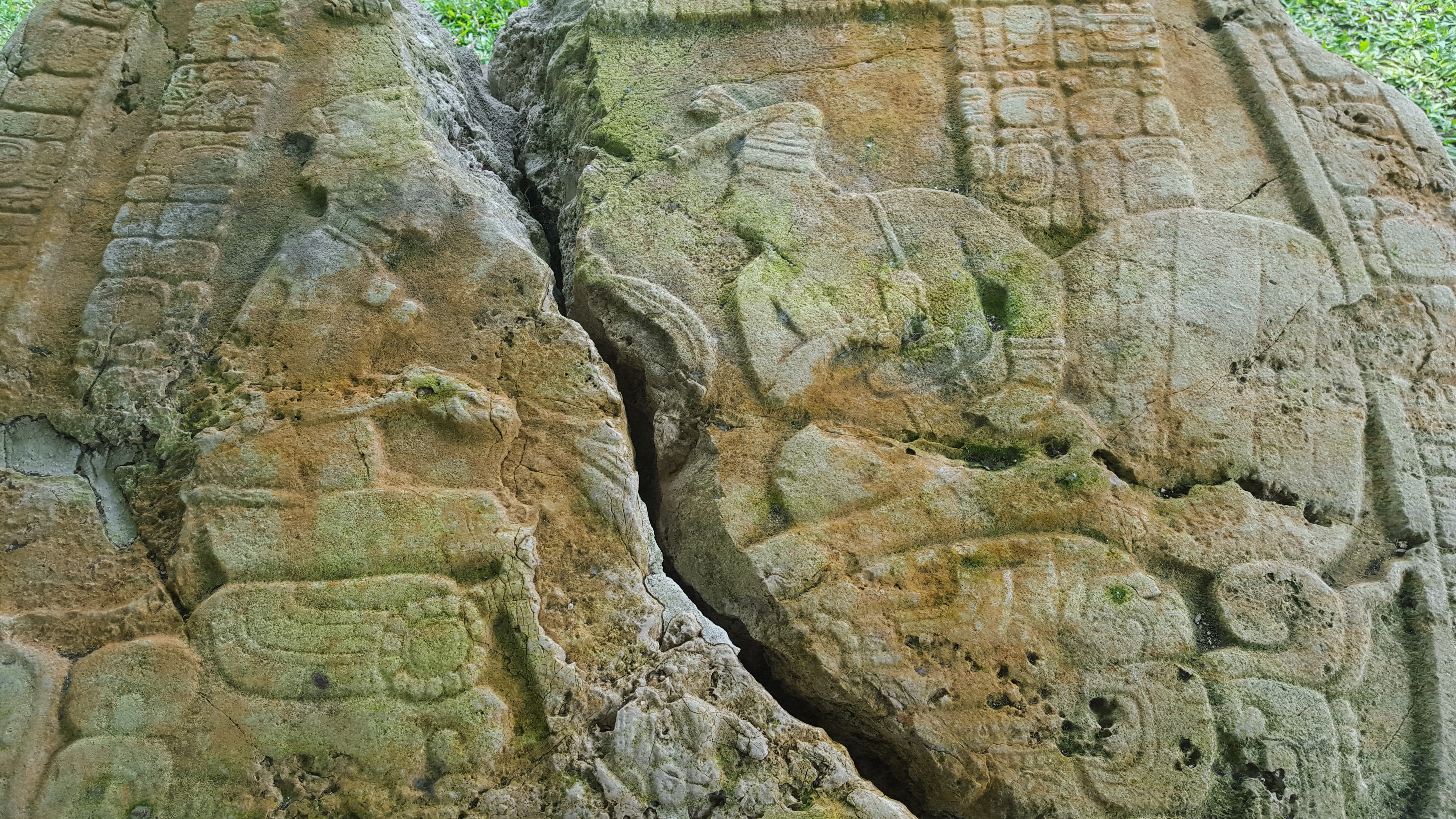
Mayan carving at the Caracol ruins

The lesson to be learned from the Mayans and Diego de Landa is to cherish our history and learn from those who have gone before us. Preserving our historical sites and texts should be a priority to make sure future generations learn from the past.

Washington’s Horses

0

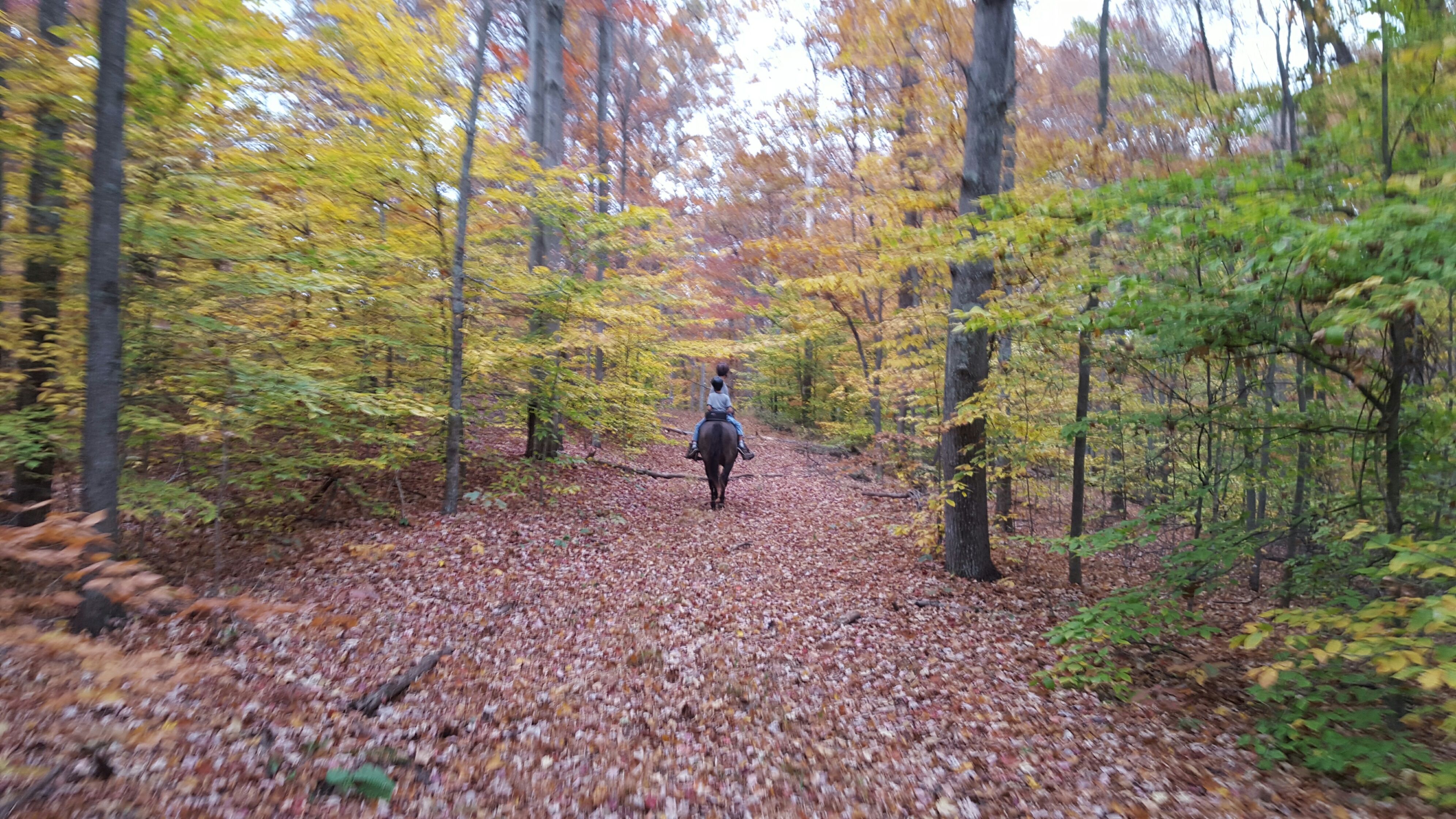
We love riding horses as a family.  There is nothing quite like a trail ride through the woods.  Connecting with nature and your horse while meandering through the woods is truly amazing.  While most of our riding is just around our farm, we do pack up the horses in the trailer and go riding at some different horse trails from time to time. The hills and woods of Brown County, Indiana offer some magnificent trails, particularly in the fall with the changing of the leaves.

20151023_165254_resized

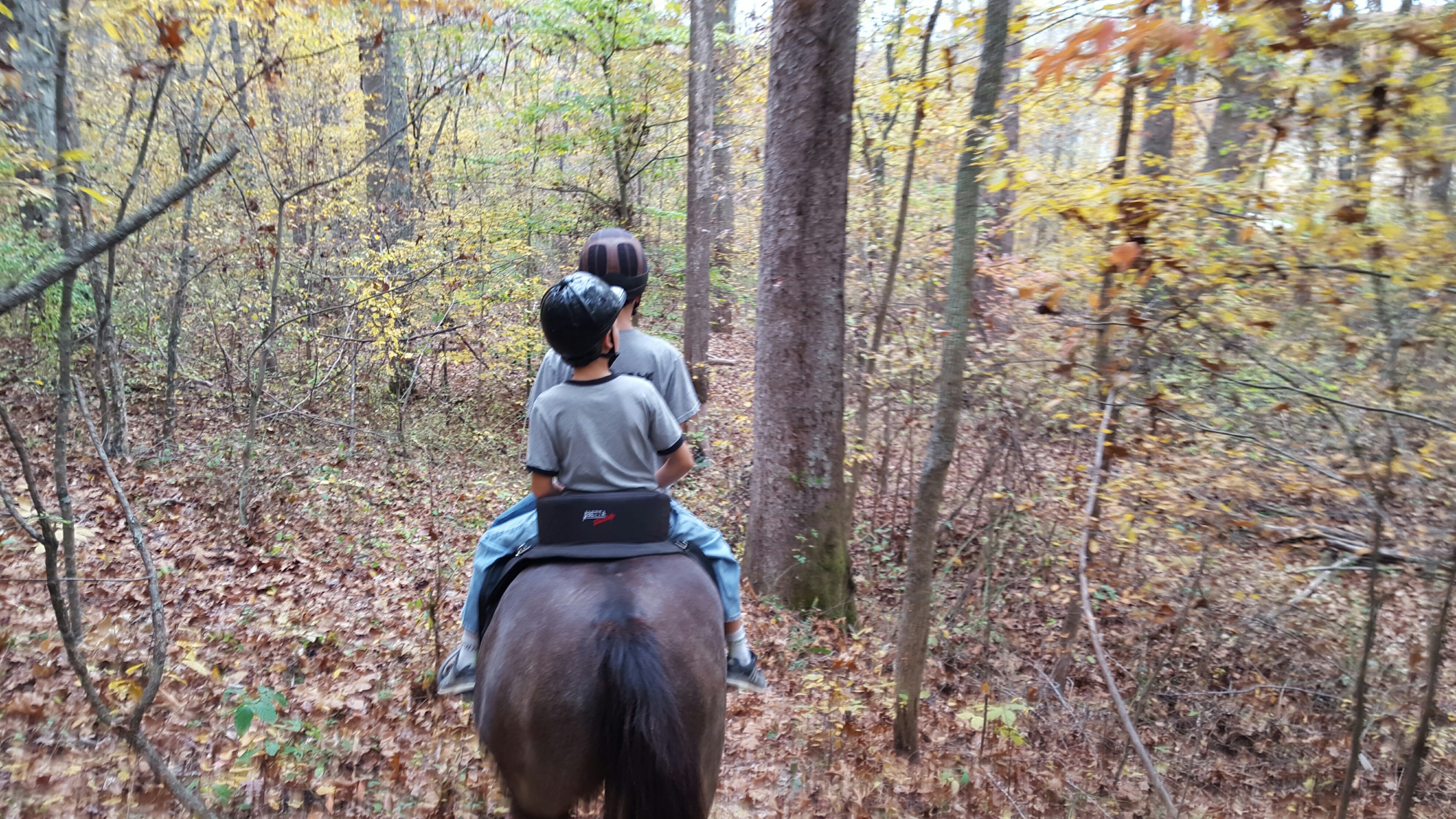
Josh and Nathan riding George

20151023_161940_resized

Some trails can get pretty narrow

More often, we ride around our farm. It’s always easier to find places to ride once the crops come out.

20151019_190622_resized

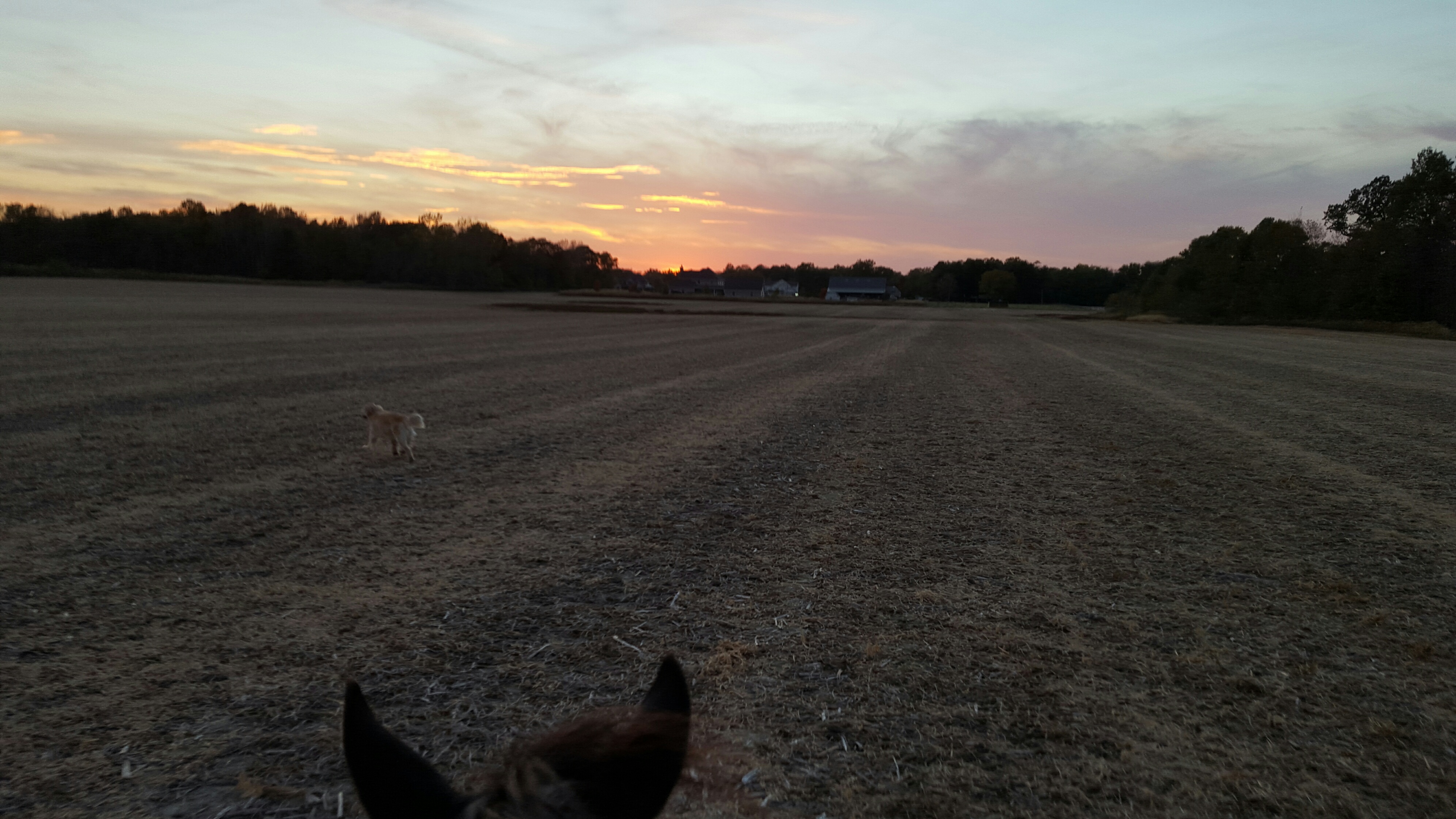
Me on the back of George riding back home at sunset

Many times when I’m riding, I wonder what it must have been like to ride alongside George Washington.  Washington was an incredible rider who would take his horse at a gallop through thick woods, over fences, and across creeks.  Fox hunting on horseback was a favorite pastime of Washington.  He would ride for many hours giving chase to a fox with his dogs and horse in hot pursuit. Washington’s horses also carried him into battle. On more than one occasion, Washington charged ahead on horseback into enemy fire, sometimes putting himself in grave danger.  As a master horseman, Washington was always graceful on horseback.  He also trained many of his own horses.  The two horses that reportedly carried Washington through the American Revolution were named Nelson and Blueskin.

Both Nelson and Blueskin survived the Revolution and were retired at Mount Vernon after the war.  Nelson had been a gift to Washington from Thomas Nelson of Virginia, and would have been about 15 years old when Washington received him. Nelson was the braver of the two horses, with Blueskin getting skittish around cannon and gunfire.  Nelson lived a long life and died in 1790 at Mount Vernon.  He would have been 27 years old which is roughly 77 years old in human years.  Clearly Washington and I share a love of horses, but there is no doubt that Washington would have been the better rider.

For more information on Washington’s horses see http://www.mountvernon.org/research-collections/digital-encyclopedia/article/nelson-horse

Fun at the Fort

0

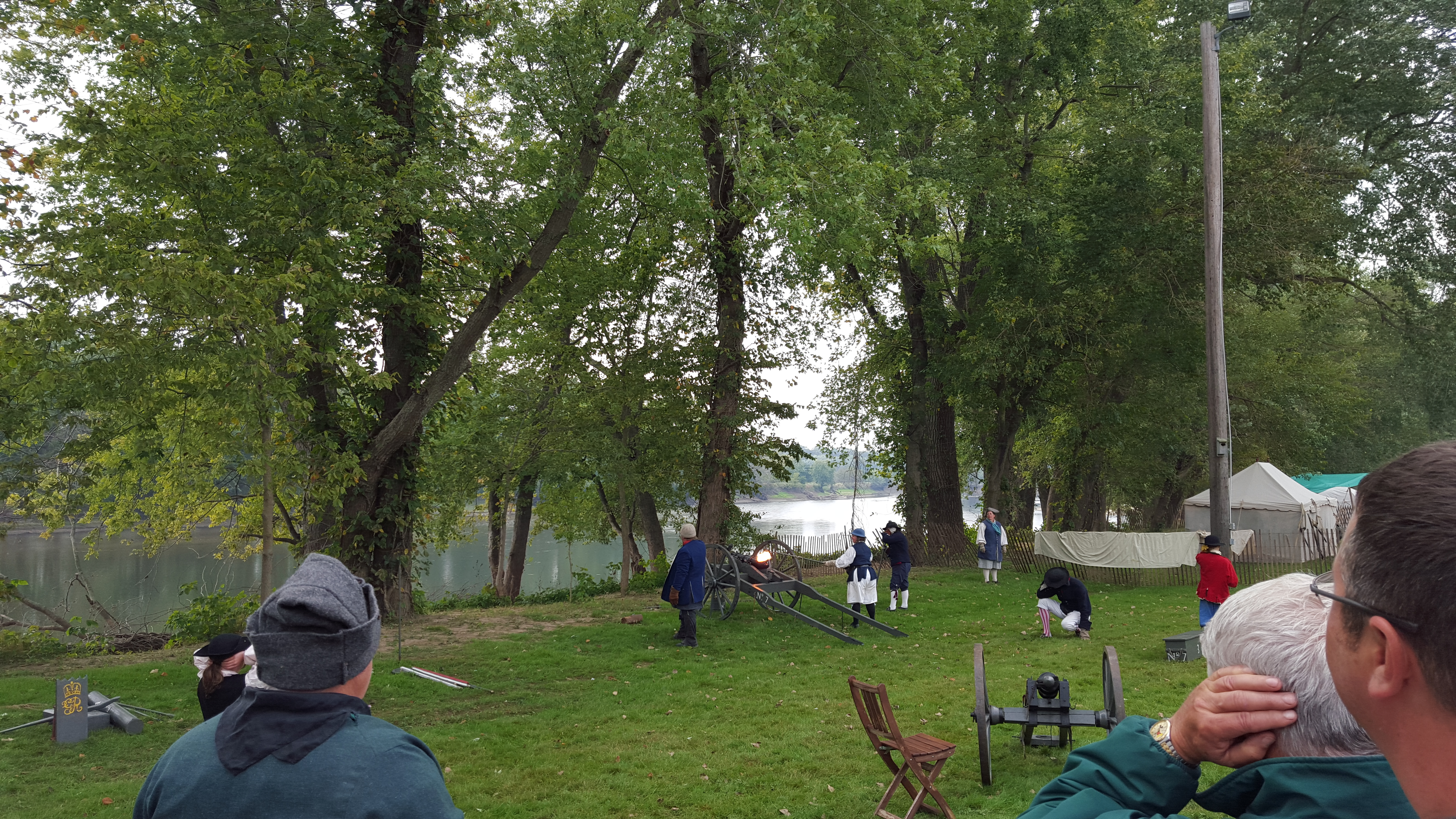
Our family loves going to the Feast of the Hunter’s Moon at Fort Ouiatenon along the banks of the Wabash River near West Lafayette, Indiana.  Ouiatenon was a French fort established in 1717 to help prevent British westward expansion.  It also served as a trading outpost along the Wabash River.  The Feast celebrates the mid-1700’s time period in this frontier area, with period costumes and drum and fife corps.

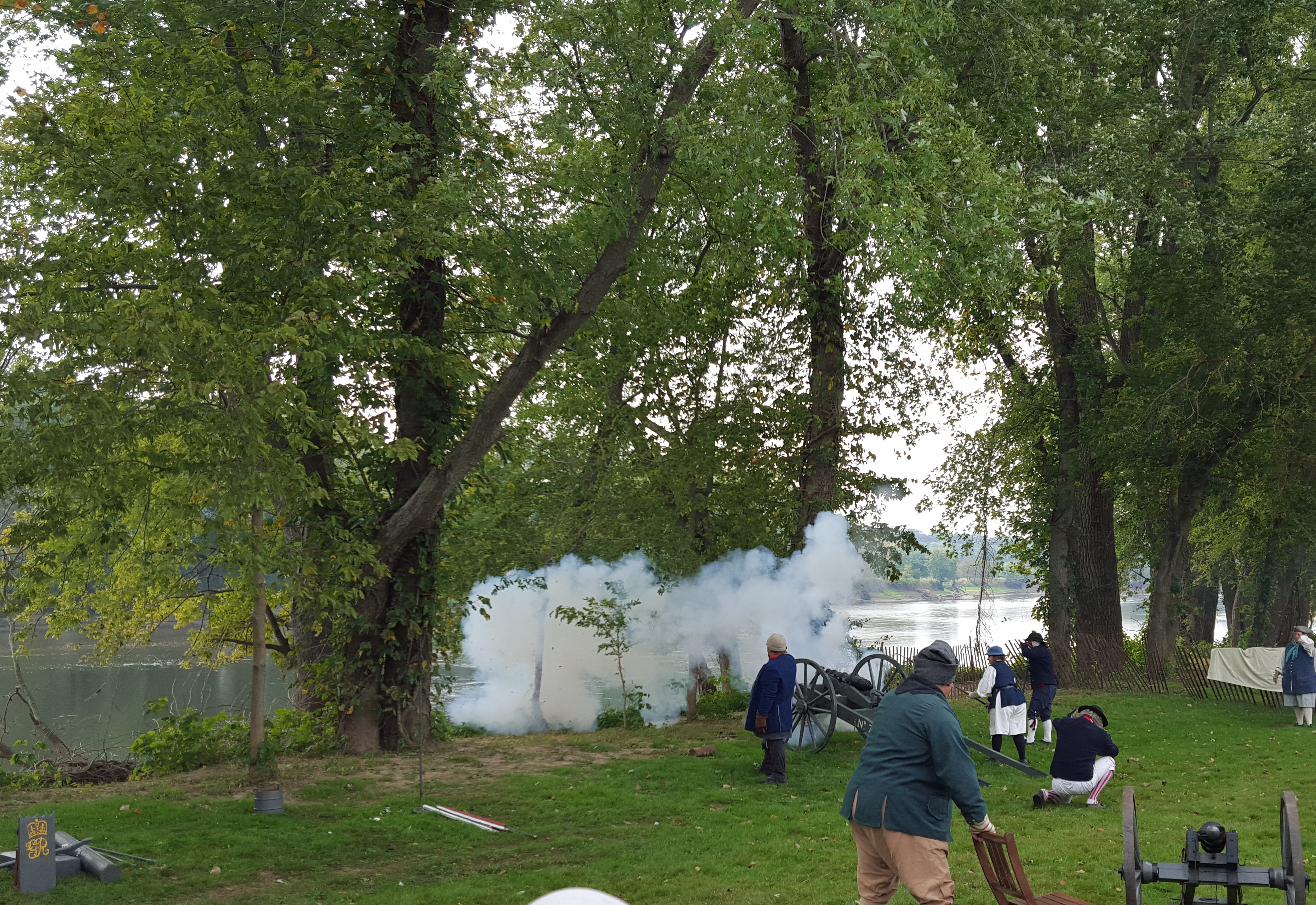
Cannon demonstrations are always exciting.  There is nothing like hearing the boom of cannon firing.  These cannon are shot out over the Wabash River, but no actual cannonballs are used in the firing.

20151004_124042

Lighting the cannon

20151004_123826(2)

Boom!

Drum and fife music fill the air with traditional period marches.

There are even a few bagpipes to be found in this Scottish battalion

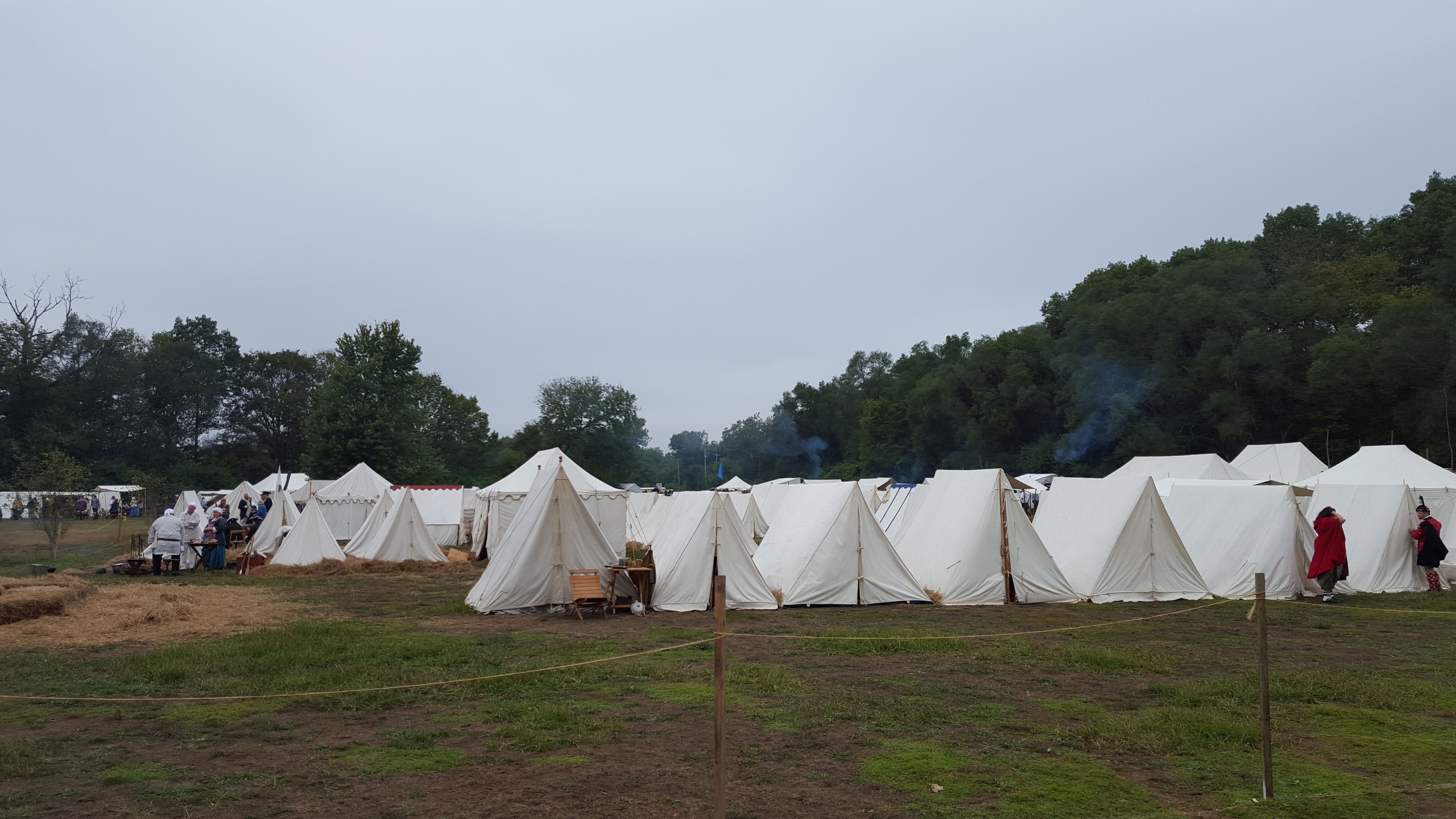
20151004_111739

Canvass tents for the reenactors add to the mid-1700s feel

As much as our family loves history, this is a great way to go back in time.  For more information about The Feast of the Hunter’s Moon and Fort Ouiatenon, check out the Tippecanoe County Historical Society’s Website at http://www.tcha.mus.in.us/forthistory.htm

Some Sweet Corn History

0

Field corn has been grown for thousands of years.  This type of corn has been used for many centuries to feed animals and to grind into cornmeal.  Sweet corn, the type my boys crave during the summer, has not been around nearly as long.  Sweet corn is believed to have been grown by the Iroquois Indiana in the 1770’s.  The Iroquois called this corn “papoon”. Its kernels were white and the cob was a bright red color that the Indians used to make red dye. New Englanders soon started growing there own papoon and through cross-pollinating began to make new varieties of sweet corn.  Sweet corn very well may have been something that showed up on George Washington’s dinner table. However, given Washington’s very bad teeth and wooden dentures, it is probably not something that he was able to eat himself.

Today, there are many different sweet corn varieties.  Shucking sweet corn and eating it for dinner is a Stevenson family tradition. Putting the corn silks on your head is optional.corn pic

If you want to learn more about some corn history, check out “The Story of Corn” by Betty Fussel.